decor store
A shabby chic living room does not need every surface distressed or every fabric covered in florals. Start with a calm base, choose one weathered focal piece, then add soft colour and texture in smaller layers. That order makes it easier to see when the room has enough. Some examples link to products and ranges sold by Shabby Chic Accessories; the category pages show the current selection.
An all-white room is optional. Off-white, stone and muted tones can form a quiet background for the older pieces you want to highlight, while your existing sofa and flooring stay put. If darker modern furniture feels too prominent, try a pale wall colour or a simple neutral throw before changing anything larger.
Give one side table, cabinet or large frame the job of bringing age and character into the room. Let it carry the visual weight instead of turning everything else into a matching distressed set. A painted cabinet with original hardware may be all the room needs.
Floral accents bring romance without taking over when you use them sparingly. Repeat one or two colours across a cushion cover, a pair of curtains or a framed print. If you choose one large botanical motif, keep the nearby linen-look fabric or cotton plain. A bold pattern needs some quiet around it.
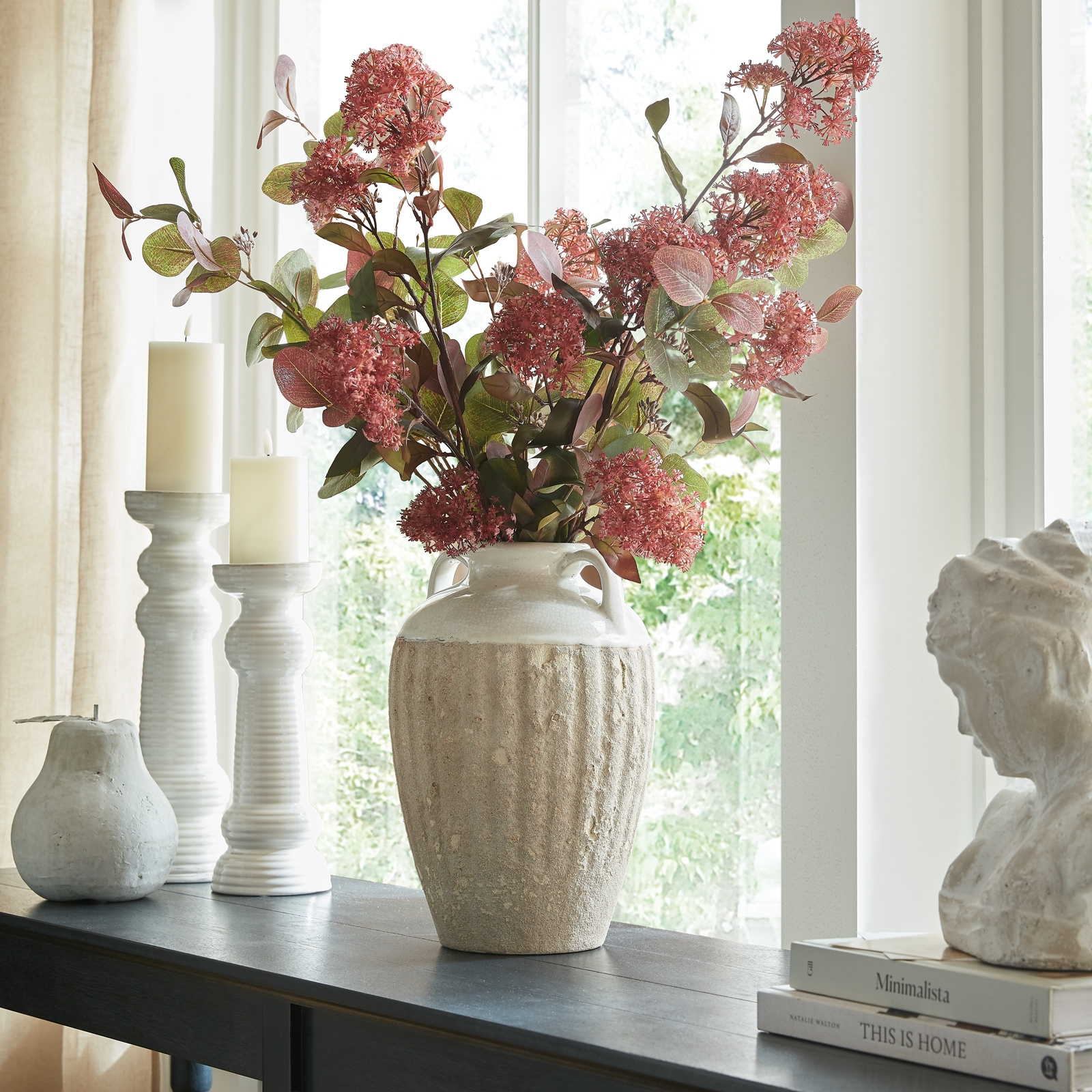
Choose from vases that suit the surface you want to fill. A taller vessel can anchor a sideboard or mantelpiece and draw the eye upwards. The Thorne Large Amphora Vase is a white ceramic example, 32 cm high and 21 cm at its widest point. The 21 cm measurement is its maximum width, not its opening diameter.
On a substantial sideboard or large hearth, look through the large vases collection. The white vases page may suit darker furniture that needs a pale contrast. Add single stem artificial flowers gradually, stepping back after each one to check the arrangement's height and shape.
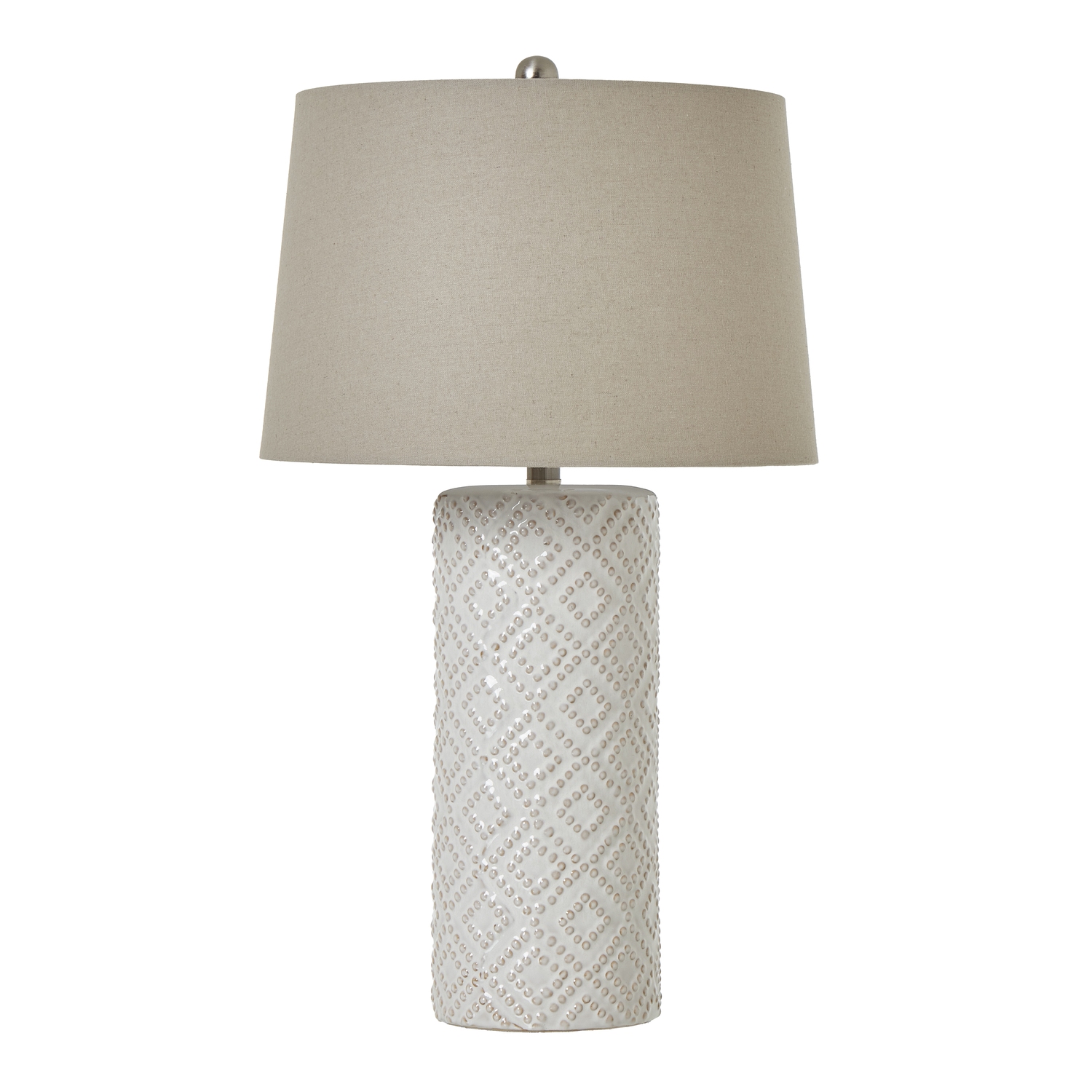
If the ceiling light leaves a seating area or corner feeling flat, place a table lamp at a lower level. For a pale, neutral example, the White Beaded Ceramic Lamp With Linen Shade has a white beaded ceramic base and linen shade. The table lamps category has more options for different positions around the room.
A mirror opposite or beside a window can reflect natural light back into the room. Before fixing it in place, check the view. A bright window, lamp or favourite corner is worth reflecting; a blank wall or cluttered shelf is less useful. The mirror does not have to be a genuine antique. A reproduction with a chipped gilt frame or weathered wooden surround can add the aged note.
When the room has enough pattern, vary the texture instead. Linen-look fabric, soft cotton, a little lace and woven storage can add interest while the palette stays muted. Choose fabrics that suit the way you use the room, and keep delicate trims away from places where they are likely to catch.
Very pale rooms sometimes need a warmer material to stop them feeling cold. A small wooden tray, a shelf with a soft patina or a weathered wood frame can break up crisp whites and pale greys with uneven brown and honey tones. One or two pieces are enough. Repeat the same weathered finish everywhere and the room can start to look staged.
A rug can connect the main seats and add softness underfoot. As a starting point, choose one large enough for the front feet of the main seating to sit on it where possible. A faded pattern can pick up floral colours used elsewhere. In a busier room, a plain textured rug gives the eye somewhere to rest. Let the room's proportions decide the final size rather than treating the front-feet placement as a fixed rule.
Shabby chic depends on curation, not accumulation. Try one focal point per surface, then gather smaller objects on a tray so they read as one group. Leave clear space around each group. This is also the quickest adjustment in a small living room: use fewer, larger accessories instead of filling every shelf and corner.
Yes. Keep the modern piece and build around it with a pale throw, one weathered side table and a lamp or floral accent. Useful furniture should remain useful. The mix often feels more believable than a room where every modern object has been disguised.
Choose one weathered focal piece and repeat a limited colour palette through smaller, movable accessories. Leave some surface space clear. Before adding another object, ask whether it brings height, texture or colour that the room does not already have.
No. Existing functional furniture can sit alongside vintage and vintage-inspired accessories. A modern chair with a floral cushion and soft throw can work beside a weathered cabinet when the colours and materials connect them.
Photograph your living room and find the one surface or corner that feels unfinished. Try one idea before buying anything else: add a vase for height, place a lamp in a dark corner or gather small accessories on a tray. If the missing element is light or height, return to the table lamp or vase section above.
Shabby chic is a style of interior design, furniture and accessories that uses worn, faded or imperfect items to create a cosy, comfortable atmosphere in your home. Items like chipped vases and rugs, vintage furniture and mismatched dishes will all contribute to this rustic-chic look that any homeowner can achieve with just a little bit of elbow grease and imagination. Or you can purchase new products online that are made and designed to look distressed or to compliment the shabby chic aesthetic.
The phrase "shabby chic" was first used in the 1980s. This was a period in design when opulence and debauchery were rife, reflecting the greed and loads-a-money culture of that decade. Elegant penthouses to corporate lobbies brimming with gleaming marble and brass, as well as sleek style, were easy to come by.
Shabby chic style is almost the polar opposite and perhaps could be considered a revolt against the excesses of that decade.
The Shabby chic look is defined by a variety of features. Worn furnishings, for example, give the impression of being old. Some items can be authentic antiques, but with multiple coats of paint peeling away reflecting a design feature that normally would be fixed or rectified, is instead desirable.
The furniture may also be distressed, which entails sanding and other processes that give it an older appearance. A piece or accessory can also be enhanced with a variety of special glazes and finishes, which may give it a distinctively vintage feel which is in keeping with Shabby Chic Style.
When it comes to shabby chic, particular fabrics are preferred, with cotton and linen at the top of the list. The colour palette typically includes a variety of colours, including pink and blue. Feminine, floral patterns are popular, and vintage textiles may be used as beautiful accents.
Slipcovers are yet another distinguishing feature of shabby chic design which were first used by Rachel Ashwell, who to many is the designer who made Shabby chic popular the Shabby Chic Godmother no less.
A shabby chic interior is filled with soft and subtle tones. White and beige are popular colours, as are pastel hues such as pink, lavender, and light blue. There is a wide range of colours to choose from, some of which are vibrant. Turquoise is one of them, especially when it comes to painted furniture.
Also, don't forget about the importance of vintage accessories in shabby chic interiors! Whether they're genuine antique and vintage items (chandeliers, china, etc.) or brand new things that appear to be old (napkins, glassware, and more), the effect is appealing, quaint and of a time gone by, but in a stylish way.
It's difficult to discuss shabby chic without mentioning Rachel Ashwell, who helped to popularize it. Rachel Ashwell opened her first store in California in 1989, though the shabby chic craze really took off during 1980's England. It was at this site that she launched her iconic slipcovers, which were draped over flea market pieces.
She also brought a variety of flea market finds into the public eye, creating a second-hand decorating style that was undeniably elegant. But not stuffy. which struck a chord with the buying public which grew in popularity.